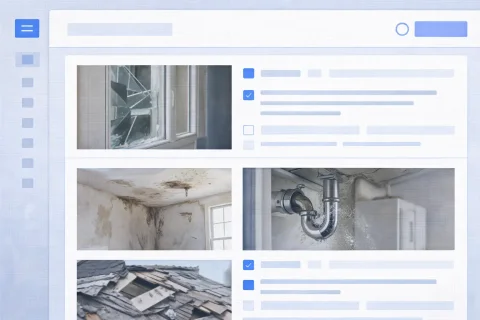

Damage Report with Photos (Photo Damage Report)

A damage report with photos is used to document defects and damage. It helps assess the situation and build a solid evidence base.

Damage Report with Photos (Photo Damage Report)

What is a Damage Report with Photos

When damage is discovered on a property, a dry textual description is often insufficient. A photo damage report solves this problem — it not only lists the defects but also visually demonstrates them, creating a reliable basis for further action.

A damage report is a document in which:

  • damage to the property is recorded
  • photos are attached
  • a description of defects is given
  • conclusions are formulated

Unlike a text report, a photo report:

  • contains evidence
  • simplifies analysis
  • speeds up decision-making

Create a photo report for your use case

Use the service to prepare a photo report for a similar task and see how it works in practice.
Create a photo report without registration
If you want to create full-featured photo reports in the dashboard — top up your balance in your user profile.

When a Damage Report is Used

A photo damage report is in demand in a wide variety of situations — from domestic insurance claims to serious construction expert assessments. Here are the key scenarios where it is indispensable.

Insurance Claims

When an insured event occurs, the most accurate documentation of the damage is required — from the extent of the damage to its location. The photo report becomes a key document for confirming the circumstances, preparing materials for the insurance company, and the subsequent loss assessment.

  • damage documentation
  • preparing insurance documents
  • damage assessment

Construction Defects

Cracks in walls, violations of the geometry of structures, and other defects must be documented with reference to specific elements. A photo report helps not only to record the problem but also to track its development over time.

  • cracks
  • structural damage
  • technology violations

Operational Damage

Wear and tear, consequences of accidents, or sudden breakdowns require prompt and clear documentation. Photos allow for a quick assessment of the nature and severity of the incident, even if access to the site is limited.

  • wear and tear
  • accidents
  • breakdowns

Logistics and Transport

Damage to cargo during transportation or discrepancies in condition upon acceptance are classic situations where photo documentation becomes a decisive argument. On-the-spot photos at the point of acceptance help to avoid disputes and speed up claim processing.

  • cargo damage
  • condition documentation upon acceptance

Mobile field reporting

Record damage with verifiable shooting context

When documenting damage, it's essential to preserve not just the image but also where, when, and during which inspection it was taken. INSPECTOR captures this data in one continuous process.

  • Photo documentation of damage
  • GPS and timestamp of capture
  • Mark up defects on the photo
  • Report for the client or expert

Document damage in INSPECTOR

Take a photo of the damage, add a caption, highlight critical areas, and generate a photo report.

Photo evidence in INSPECTORImage annotationVerify photo authenticity

The Photo Report as an Evidence Base

In controversial and legally significant situations, text alone is not enough — irrefutable evidence is needed. It is the photos that turn the damage report into a tool for protecting your interests.

The damage photo report is used as:

Photos allow you to confirm:

  • the fact of damage
  • the scale
  • the location

Combination: Damage Act + Photo Report

In practice, the act and the photo report do not compete, but complement each other. Their combined use creates a complete and legally weighty document. In real practice, both formats are used:

Damage Act (Damage / Inspection Act)

This is an official document that records the circumstances, the list of defects, and the commission's conclusions. It contains a formal description of the situation and is necessary for most official procedures.

Contains:

  • description of the situation
  • list of defects
  • conclusions

Photo Report

The visual component makes the act evidential and understandable. A photo report adds visual detail to the formal description, eliminating the possibility of dual interpretations.

Contains:

  • visual documentation
  • evidence
  • detailing

📌 Together they form a complete document.

Advantages of a Damage Photo Report

Let's visually compare a photo report and a traditional text act by key parameters. The difference becomes obvious.

Parameter Photo Report Text Act
Visual Fixation
Evidence Base partially
Clarity average
Analysis Speed lower
Convenience for Insurance limited

What Photos Are Needed for a Damage Report

For a photo report to truly fulfill its function, it must be captured and structured according to certain principles. Below are the types of shots that give a complete picture of the damage.

General View of the Object

Overview shots show the environment and the exact location of the defect. This is critically important for understanding the context and identifying the place.

Close-ups of Damage

Detailed shots of defects — cracks, chips, deformations — give an idea of the nature and severity of the destruction. They are the direct evidence.

  • cracks
  • chips
  • deformations

Detailing

Macro shots showing the structure of the defect and its depth are especially important for technical expertise. They allow you to assess how serious the damage is and what measures are required.

  • defect structure
  • damage depth

Before/After Photos (if available)

If shots of the original condition are preserved, they should definitely be included. The "before and after" comparison instantly demonstrates the scale of changes and makes the report as convincing as possible.

How to Properly Create a Damage Photo Report

Even high-quality shots can lose their value if the report is compiled chaotically. Following a few simple rules guarantees that your document will be taken seriously. To make the report useful:

It is especially important to correctly arrange the order of images — this affects the interpretation of the report. Start with a general plan and gradually move to details, as if guiding the viewer through the object.

Common Mistakes in Damage Documentation

Even with obvious damage, the report can be considered unconvincing if the following mistakes are made:

  • No scale — it is impossible to assess the size of the defect, which casts doubt on the severity of the damage.
  • No context — it is unclear where exactly the damage is located and which element it relates to.
  • Blurry photos — detail is lost, making expert evaluation impossible.
  • Lack of descriptions — photos without explanations leave room for different interpretations.

How to Create a Damage Report Online

Modern online tools allow you to prepare a professional damage report in just minutes. You no longer need to manually assemble the document in Word. Using the service allows you to:

Basic Scenario

The typical path from documentation to a finished document takes a few simple steps. No magic — only sequential actions, accessible even from a mobile phone on site.

  1. Document the damage
  2. Take photos
  3. Upload them to the system
  4. Add explanations
  5. Generate the report

Advantages of a Digital Damage Report

The transition to a digital format provides a tangible benefit compared to traditional methods of preparation. Among the main advantages:

  • accelerated insurance claim processing — the report is ready to be sent immediately after inspection
  • reduction of errors — automatic sorting and templates eliminate the human factor
  • standardization of reports — all documents are prepared uniformly, which is especially valued by insurance companies
  • ease of storage and transfer — the PDF file is easily sent and does not lose formatting

Quick Use Scenarios

Depending on the situation, a damage report can be applied in different ways. Here are some ready-made scenarios covering the most frequent requests:

Used Guides

To solve the problem of compiling such a photo report, use the following guides. They will walk you step-by-step through the entire process, from uploading photos to final export.

Used Functions

To prepare such a photo report, the following platform functions are often used. They cover all stages — from adding explanations to generating the finished document.

FAQ

We have collected answers to the most common questions on the topic of photo damage reports.

A complete damage report includes photos of defects with explanatory captions, a textual description of the damage, and final conclusions. This is the minimum required set for an objective assessment of the situation.

Yes, this is one of the main scenarios. A properly prepared damage photo report is a recognized appendix to the insurance claim and serves as direct evidence of the damage.

Yes, this is important for interpretation. Captions explain exactly what to look at and connect the image with the text description, eliminating ambiguity when analyzing the report.

PDF — for sending, as it guarantees the immutability of formatting. Word — for cases where editing may be required. Choose the format based on the tasks: PDF for final communication, Word — for the working process.

Yes, with correct documentation. If the shooting rules (scale, context, sharpness) are followed and exhaustive captions are given, the photo report becomes legally significant confirmation of the fact of damage.